Is Drone Photography Business Legal in India?
Yes, a drone photography business is legal in India, provided the operator uses a compliant drone, holds the required remote-pilot certification and obtains the necessary airspace and location permissions.
Drone photography is commonly used for weddings, films, real-estate projects, tourism, construction surveys and promotional videos. However, owning a drone does not automatically give a person permission to fly it anywhere. Commercial operators must follow aviation, privacy, safety and business regulations.
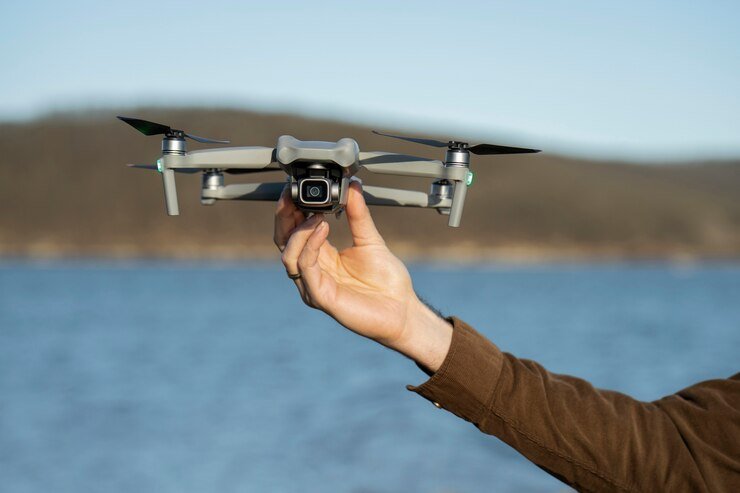
Legal Status of Drone Photography in India
Commercial drone operations are principally regulated by the Drone Rules, 2021, along with subsequent amendments and directions issued by the Ministry of Civil Aviation and the Directorate General of Civil Aviation (DGCA).
India does not normally require a separate licence called a “drone photography business licence.” Nevertheless, the drone, pilot, flight location and business must independently satisfy the applicable legal requirements.
Drone Registration and Type Certification
Most drones used for commercial photography must belong to an approved or type-certified model. The drone must also be registered on the Digital Sky system and receive a Unique Identification Number, unless a specific legal exemption applies.
The UIN must be displayed on the drone as required. Operators should verify the drone’s certification and registration eligibility before purchasing it, particularly when buying an imported or second-hand drone.
The DGCA drone portal currently states that registration of non-type-certified drones has been temporarily suspended until further notice. Therefore, businesses should preferably purchase compliant drones from authorised and reliable sellers.
Remote Pilot Certificate
A person conducting paid drone photography will usually need a Remote Pilot Certificate for the relevant drone category and sub-category. The training must be completed through a DGCA-authorised Remote Pilot Training Organisation.
A remote-pilot certificate is generally not required for operating a nano drone. The exemption available for micro drones is limited to non-commercial use. Therefore, a person using a micro drone for paid wedding, property or event photography should obtain the applicable certificate.
Airspace Permission
The operator must check the latest airspace map and restrictions before every flight. Indian drone airspace is broadly divided into three zones:
- Green zone: Prior flight permission is generally not required when operating within the published limits. Temporary restrictions and NOTAMs must still be checked.
- Yellow zone: Permission from the relevant air traffic control authority is required.
- Red zone: Drone operations are permitted only with authorisation from the Central Government.
Extra caution is necessary near airports, military establishments, international borders, prisons, government buildings and other security-sensitive locations. Client approval cannot replace an aviation permission.
Business Registration and Insurance
The business may operate as a sole proprietorship, partnership, LLP or company. Depending on the business structure and location, registrations may include PAN, a current bank account, Shops and Establishments registration, municipal trade permission and GST registration.
Third-party insurance is generally required for non-nano drones under the Drone Rules. Commercial operators should also consider equipment, public-liability and professional-indemnity insurance because an accident may damage property or injure people.
Privacy and Location Permission
Airspace approval does not give an operator unrestricted permission to photograph people or private property.
Written consent should be obtained from the client and the owner or manager of the venue. Additional approval may be required for monuments, wildlife areas, government campuses, industrial facilities, railway property or other controlled locations.
Operators should avoid recording inside homes, private compounds or other areas where people reasonably expect privacy. Footage containing identifiable individuals should be stored, edited and shared responsibly. Client contracts should clearly state who owns the raw footage and how it may be used.
When Can Drone Photography Become Illegal?
Drone photography may become unlawful when the operator:
- Flies an unregistered or non-compliant drone without an applicable exemption.
- Conducts commercial operations without the required Remote Pilot Certificate.
- Enters yellow or red airspace without permission.
- Flies near an airport or security-sensitive installation unlawfully.
- Ignores temporary flight restrictions.
- Records private property or individuals intrusively.
- Operates recklessly over crowds, traffic or unsafe locations.
- Uses the footage for harassment, surveillance or another unlawful purpose.
- Falsely represents that all DGCA and location approvals have been obtained.
Violations may result in penalties, confiscation of equipment, cancellation of approvals or criminal proceedings, depending on the circumstances.
Bottom Line
A drone photography business is legal in India, but it is a regulated activity. The operator must use an eligible drone, complete the necessary registration, obtain remote-pilot certification, check airspace restrictions and secure venue or location consent. Every assignment should be evaluated separately because permission for one location or event does not automatically cover another.
Frequently Asked Questions
Q1. Do I need a Remote Pilot Certificate for paid photography using a micro drone?
A: Yes. The exemption for micro drones generally applies only to non-commercial use. Paid photography is a commercial operation, so the applicable Remote Pilot Certificate should be obtained.
Q2. Can I fly a drone at a wedding with only the couple’s permission?
A: Not necessarily. Permission from the couple does not replace approval from the venue owner or aviation authorities. The operator must check the airspace zone, temporary restrictions, crowd safety and local security requirements.
Q3. Can a client authorise a drone flight in a red or yellow zone?
A: No. Client or property-owner consent only covers access to the location. It cannot replace permission required from aviation or government authorities.
Q4. Can drone photographs be uploaded to social media?
A: Yes, if the footage was captured lawfully and its publication does not violate privacy, confidentiality, copyright, security restrictions or the client agreement. Separate consent may be advisable when identifiable individuals are prominently featured.