Is Burning Money Illegal in America?
Burning money in the United States is more complicated legally than the belief that it is simply “illegal.” Federal law prohibits certain forms of mutilating U.S. currency when a person acts with the intent to make it unfit to be reissued. Therefore, the issue is not simply whether a banknote catches fire, but what the person does and why.
What Does Federal Law Say About Burning Money?
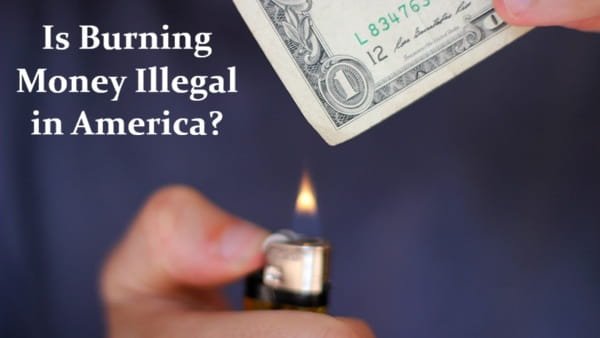
The primary federal statute is 18 U.S.C. §333. It prohibits mutilating, cutting, defacing, disfiguring, perforating, or otherwise altering certain U.S. banknotes, including Federal Reserve notes, with the intent to render the note unfit to be reissued. A violation can result in a federal fine or imprisonment for up to six months, or both.
The statute does not specifically use the word “burn.” However, deliberately burning a Federal Reserve note until it can no longer be reissued could fall within the prohibition if the required intent is present.
Is Accidentally Burning a Dollar Bill Illegal?
Accidental damage is different from intentional destruction. Federal law focuses on mutilation carried out with the intent to make currency unfit for reissue. Therefore, accidentally damaging a banknote through a house fire or another accident does not automatically mean the owner has committed a federal crime.
The Bureau of Engraving and Printing recognizes that currency can become mutilated through fire, water, chemicals, explosives, and deterioration. Its redemption program allows lawful holders to submit severely damaged currency for examination and possible redemption.
What If You Burn Money You Own?
Owning a banknote does not necessarily give someone an unrestricted right to destroy it. Federal law specifically regulates certain mutilation of U.S. currency.
Section 333 focuses on conduct intended to make a banknote unfit for reissue. Consequently, deliberately destroying currency should not automatically be treated as lawful simply because the person owns the note.
At the same time, the statute does not make every minor mark, tear, stain, or accidental burn a federal crime. The required intent is an important part of the offense.
What Happens to Burned or Mutilated Money?
The Bureau of Engraving and Printing operates a Mutilated Currency Division that examines severely damaged Federal Reserve notes. The Bureau considers currency mutilated when one-half or less of the original note remains, or when its value is questionable.
Fire is specifically identified as a common cause of mutilated currency. Lawful holders can submit eligible damaged notes for examination and possible redemption, and the service is free.
If a damaged note remains clearly identifiable and is not severely mutilated, it may instead be exchanged through a commercial financial institution.
Is It Illegal to Write on or Tear Money?
Not every form of damage to currency is automatically a federal crime. Section 333 addresses mutilation when accompanied by the specified intent to render the currency unfit for reissue.
The Bureau of Engraving and Printing also distinguishes “mutilated currency” from ordinary “unfit currency.” Notes can become dirty, defaced, torn, or worn without necessarily meeting the Bureau’s definition of mutilated currency.
Therefore, the statement that “you can never write on money” is too broad. The legal consequences depend on the conduct, intent, and applicable law.
What Is the Penalty?
Under 18 U.S.C. §333, a violation can result in a fine, imprisonment for up to six months, or both. The consequences in an individual case depend on the facts and applicable federal enforcement process.
The statute does not mean that anyone who accidentally damages a dollar bill will be prosecuted. The required intent is a significant part of the offense.
Is Burning Money Legal in America?
The most accurate answer is that deliberately burning U.S. currency can violate federal law when it is done with the intent covered by 18 U.S.C. §333, particularly an intent to render the note unfit to be reissued. Accidental burning and ordinary wear are treated differently, and severely damaged lawful currency may be eligible for redemption.
Therefore, saying that “burning money is always illegal” is too broad. But deliberately destroying U.S. banknotes should not be assumed to be lawful merely because the money belongs to the person destroying it.
Conclusion
Federal law specifically addresses mutilation of U.S. currency and requires the relevant intent for an offense under 18 U.S.C. §333.
If money is accidentally damaged by fire, the owner may be able to have it evaluated for redemption. If someone deliberately destroys currency, however, the circumstances and intent can create federal legal consequences.