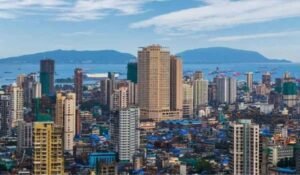
List of Metro Cities in India With Their States and Population
India is home to some of the world’s largest and fastest-growing urban centres. With increasing urbanisation, industrial development and employment opportunities, millions of people move to major Indian cities every year. These cities have become important centres for business, education, healthcare, transportation, technology and economic activities. They are commonly known as metro cities or metropolitan cities.
Metro cities play a significant role in India’s development by attracting investments, generating employment and supporting modern infrastructure. However, their growing populations also create challenges such as traffic congestion, pollution, housing shortages and pressure on public facilities.
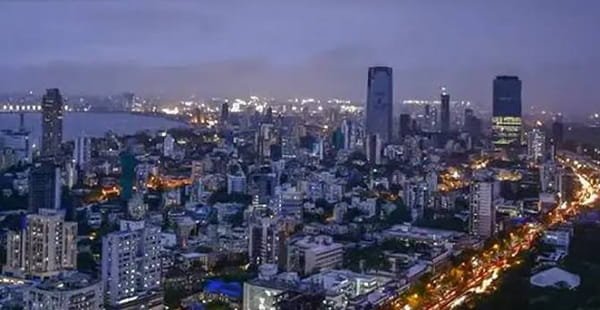
If you are looking for a list of metro cities in India with their states and population, this article provides an overview of major metropolitan centres, their population figures and their importance.
What Is a Metro City in India?
A metro city is a large urban centre with a substantial population, developed infrastructure, diverse employment opportunities and significant economic activities. These cities generally have facilities such as metro rail, airports, universities, specialised hospitals, commercial centres and large residential areas.
According to India’s constitutional definition under Article 243P(c), a metropolitan area is an area with a population of 10 lakh (1 million) or more, spread across one or more districts and consisting of two or more municipalities, panchayats or contiguous areas, as specified by the Governor.
It is important to understand that a metropolitan area, municipal city and urban agglomeration are not always the same. Their population figures can differ depending on the geographical boundaries used.
For a meaningful comparison, the population figures below use the 2011 Census of India urban agglomeration data, rather than mixing municipal and metropolitan-region populations. These are historical census figures, not current population estimates.
Complete List of Metro Cities in India With Their States and Population
According to the Ministry of Housing and Urban Poverty Alleviation’s 2011 Census-based data, India had 53 urban agglomerations and cities with populations of one million or more.
The following table presents these cities in descending order of population. Figures represent the 2011 Census population, not updated 2026 estimates.
| No. | Metro City / Urban Agglomeration | State / Union Territory | Population (2011) |
| 1 | Greater Mumbai | Maharashtra | 1,84,14,288 |
| 2 | Delhi | Delhi (NCT) | 1,63,14,838 |
| 3 | Kolkata | West Bengal | 1,41,12,536 |
| 4 | Chennai | Tamil Nadu | 86,96,010 |
| 5 | Bengaluru | Karnataka | 84,99,399 |
| 6 | Hyderabad | Telangana* | 77,49,334 |
| 7 | Ahmedabad | Gujarat | 63,52,254 |
| 8 | Pune | Maharashtra | 50,49,968 |
| 9 | Surat | Gujarat | 45,85,367 |
| 10 | Jaipur | Rajasthan | 30,73,350 |
| 11 | Kanpur | Uttar Pradesh | 29,20,067 |
| 12 | Lucknow | Uttar Pradesh | 29,01,474 |
| 13 | Nagpur | Maharashtra | 24,97,777 |
| 14 | Ghaziabad | Uttar Pradesh | 23,58,525 |
| 15 | Indore | Madhya Pradesh | 21,67,447 |
| 16 | Coimbatore | Tamil Nadu | 21,51,466 |
| 17 | Kochi | Kerala | 21,17,990 |
| 18 | Patna | Bihar | 20,46,652 |
| 19 | Kozhikode | Kerala | 20,30,519 |
| 20 | Bhopal | Madhya Pradesh | 18,83,381 |
| 21 | Thrissur | Kerala | 18,54,783 |
| 22 | Vadodara | Gujarat | 18,17,191 |
| 23 | Agra | Uttar Pradesh | 17,46,467 |
| 24 | Visakhapatnam | Andhra Pradesh | 17,30,320 |
| 25 | Malappuram | Kerala | 16,98,645 |
| 26 | Thiruvananthapuram | Kerala | 16,87,406 |
| 27 | Kannur | Kerala | 16,42,892 |
| 28 | Ludhiana | Punjab | 16,13,878 |
| 29 | Nashik | Maharashtra | 15,62,769 |
| 30 | Vijayawada | Andhra Pradesh | 14,91,202 |
| 31 | Madurai | Tamil Nadu | 14,62,420 |
| 32 | Varanasi | Uttar Pradesh | 14,35,113 |
| 33 | Meerut | Uttar Pradesh | 14,24,908 |
| 34 | Faridabad | Haryana | 14,04,653 |
| 35 | Rajkot | Gujarat | 13,90,933 |
| 36 | Jamshedpur | Jharkhand | 13,37,131 |
| 37 | Srinagar | Jammu and Kashmir (UT) | 12,73,312 |
| 38 | Jabalpur | Madhya Pradesh | 12,67,564 |
| 39 | Asansol | West Bengal | 12,43,008 |
| 40 | Vasai-Virar | Maharashtra | 12,21,233 |
| 41 | Prayagraj (Allahabad) | Uttar Pradesh | 12,16,719 |
| 42 | Dhanbad | Jharkhand | 11,95,298 |
| 43 | Aurangabad | Maharashtra | 11,89,376 |
| 44 | Amritsar | Punjab | 11,83,705 |
| 45 | Jodhpur | Rajasthan | 11,37,815 |
| 46 | Ranchi | Jharkhand | 11,26,741 |
| 47 | Raipur | Chhattisgarh | 11,22,555 |
| 48 | Kollam | Kerala | 11,10,005 |
| 49 | Gwalior | Madhya Pradesh | 11,01,981 |
| 50 | Durg-Bhilai Nagar | Chhattisgarh | 10,64,077 |
| 51 | Chandigarh | Chandigarh (UT) | 10,25,682 |
| 52 | Tiruchirappalli | Tamil Nadu | 10,21,717 |
| 53 | Kota | Rajasthan | 10,01,365 |
Source: Census of India 2011, as reproduced in the Government of India’s Ministry of Housing and Urban Poverty Alleviation Annual Report 2011–12. *Hyderabad was part of undivided Andhra Pradesh in 2011 and is now in Telangana. Population figures retain the original 2011 census geographical units.
Top 10 Most Populated Metro Cities in India
The population figures show that metropolitan development is concentrated in several major states. The following are the ten largest urban agglomerations in the 2011 data.
Mumbai: Greater Mumbai ranks first, with approximately 1.84 crore residents. It is India’s major financial centre and an important hub for banking, entertainment and commerce.
Delhi: Delhi ranks second, with approximately 1.63 crore residents. It is the national capital and an important centre for administration, education, business and tourism.
Kolkata: With approximately 1.41 crore residents, Kolkata is a major commercial, cultural and educational centre in eastern India.
Chennai: Chennai has approximately 86.96 lakh residents. It is known for automobile manufacturing, healthcare, education and information technology.
Bengaluru: Bengaluru has approximately 84.99 lakh residents and is widely recognised for its information technology industry and startup ecosystem.
Hyderabad: Hyderabad has approximately 77.49 lakh residents. It is an important centre for technology, pharmaceuticals and biotechnology.
Ahmedabad: With approximately 63.52 lakh residents, Ahmedabad is known for textiles, manufacturing, trade and business activities.
Pune: Pune has approximately 50.50 lakh residents and is recognised for its educational institutions, automobile industry and IT companies.
Surat: Surat has approximately 45.85 lakh residents and is particularly famous for diamond processing and textile manufacturing.
Jaipur: Jaipur has approximately 30.73 lakh residents. It is Rajasthan’s capital and an important destination for tourism, trade and education.
Which Indian State Has the Highest Number of Metro Cities?
Based on the 53-city list, Kerala has the highest number of million-plus urban agglomerations, with seven entries. Uttar Pradesh follows with six entries, while Maharashtra has five.
The distribution reflects differences in urbanisation, settlement patterns, population concentration and economic development across Indian states.
Important Things to Know About Metro City Population Data
When comparing the population of Indian metro cities, it is important to understand how census figures are calculated.
Urban agglomeration versus municipal population: An urban agglomeration includes a main urban settlement and its adjoining connected towns or outgrowths. Municipal population generally covers the boundaries of a particular municipal corporation or local authority. Therefore, their population figures may differ.
2011 Census figures: The table uses 2011 Census data because these are the official figures used in the cited government classification. They should not be treated as actual population counts for 2026.
Changes in state boundaries and city names: Some administrative changes have taken place since 2011. For example, Telangana was formed in 2014, and Allahabad was renamed Prayagraj in 2018. Jammu and Kashmir also became a Union Territory in 2019.
Why Are Metro Cities Important for India?
Metro cities are important drivers of India’s economic and social development. They attract domestic and international investments, generate employment and provide opportunities across different industries.
They also support the growth of sectors such as information technology, banking, healthcare, education, manufacturing, transportation and tourism.
Furthermore, metropolitan development encourages infrastructure improvements, including highways, airports, railway networks, metro systems and residential projects.
However, increasing urban populations require better planning. Affordable housing, efficient public transportation, waste management, clean water and pollution control are essential for sustainable metropolitan development.
Conclusion
India has several major metropolitan centres that contribute to its economic growth, industrial development and employment generation. According to the 2011 Census-based government classification, there were 53 urban agglomerations and cities with populations of one million or more.
Greater Mumbai, Delhi and Kolkata were the three most populated urban agglomerations in this list. Other important metropolitan centres include Chennai, Bengaluru, Hyderabad, Ahmedabad, Pune and Surat.
Understanding the list of metro cities in India with their states and population helps readers understand the country’s urbanisation patterns, population distribution and regional development.
Frequently Asked Questions (FAQs)
Q. How many metro cities are there in India?
According to the Government of India’s 2011 Census-based classification, India had 53 urban agglomerations and cities with populations of one million or more.
Q. Which is the largest metro city in India by population?
Greater Mumbai was the largest urban agglomeration in the 2011 Census-based list, with a population of 1,84,14,288.
Q. Which is the second-largest metro city in India?
Delhi was the second-largest urban agglomeration, with a population of 1,63,14,838 according to the 2011 Census-based figures.
Q. Which Indian state has the most metro cities?
Kerala has the highest number in the 53-city list, with seven million-plus urban agglomerations.
Q. Is Hyderabad a metro city?
Yes. Hyderabad is a major metropolitan city in Telangana and an important centre for information technology, pharmaceuticals and business.
Q. What is the population limit for a metro city in India?
A population of one million (10 lakh) or more is commonly used for India’s broad metropolitan or million-plus city classification.
Q. Are metro city population figures updated every year?
No. Official population figures from the Census of India are collected through decennial censuses rather than annual population counts. The figures in this article are from the 2011 Census.