What Happens When a Crypto Stablecoin Loses Its Peg?
Stablecoins are an important part of the cryptocurrency market. They are designed to maintain a relatively stable value compared with a reference asset, most commonly the US dollar. Traders use them to move funds between exchanges, participate in DeFi applications, store trading capital and reduce exposure to the price volatility of cryptocurrencies such as Bitcoin and Ethereum.
However, stablecoins are not always perfectly stable. Under certain circumstances, a stablecoin can move away from its intended value. This event is commonly called a depeg.
For example, if a stablecoin is designed to maintain a value of $1 but starts trading at $0.95, it has lost its dollar peg.
Understanding what happens during a stablecoin depeg is important because it can affect traders, investors, DeFi protocols and the wider cryptocurrency market.
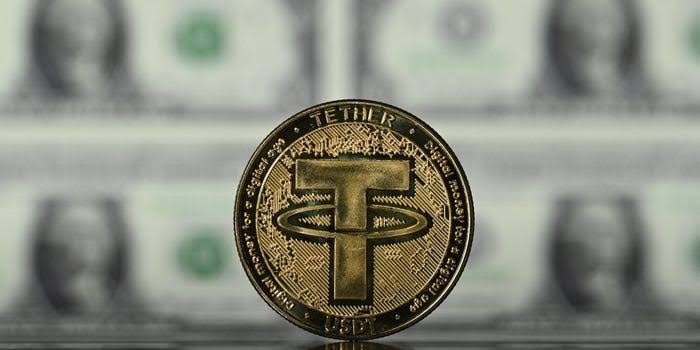
What Is a Stablecoin Peg?
A peg is a mechanism intended to keep a stablecoin’s market value close to a reference asset.
For a US-dollar stablecoin, the target is generally:
1 stablecoin ≈ $1
The methods used to maintain this value depend on the type of stablecoin.
Some stablecoins are backed by reserves such as cash and highly liquid assets. Others use cryptocurrency collateral, while algorithmic systems may rely on supply-management mechanisms.
The goal is similar: maintain confidence that the stablecoin can retain a relatively stable value.
What Is a Stablecoin Depeg?
A stablecoin depeg occurs when its market price moves significantly away from its intended reference value.
For example:
- Target price: $1
- Actual market price: $0.98
The stablecoin is trading below its peg.
A stablecoin can also trade above its target:
- Target: $1
- Market price: $1.03
This is also a deviation from the peg, although investors often pay particular attention to downward depegging because it can create concerns about reserves, liquidity or the stability of the underlying mechanism.
A small temporary movement of a few cents does not necessarily mean the stablecoin has permanently failed.
Why Do Stablecoins Lose Their Peg?
There are several possible causes.
Lack of Market Liquidity
If there are not enough buyers and sellers, relatively large transactions can cause the stablecoin’s price to move away from its target.
Loss of Confidence
If investors become concerned about the stablecoin’s reserves or issuer, they may rush to sell.
This can increase selling pressure.
Reserve Problems
For reserve-backed stablecoins, concerns about the quality, availability or accessibility of reserves can affect confidence.
Collateral Volatility
Crypto-backed stablecoins may be affected by sharp declines in the value of their collateral.
Market Panic
During periods of extreme volatility, investors may rapidly move capital into assets they consider safer.
This can create unusual demand and liquidity conditions.
Smart Contract or Protocol Problems
A vulnerability or technical failure can affect certain stablecoin systems, particularly those that rely heavily on smart contracts.
What Happens to the Stablecoin’s Price?
The first visible effect of a depeg is a change in market price.
Suppose a stablecoin normally trades at $1.
During a period of market stress, it could trade at:
- $0.99
- $0.97
- $0.90
- $0.75
The size and duration of the deviation matter.
A brief move to $0.99 may be relatively minor.
A prolonged decline to $0.80 would represent a much more serious loss of confidence.
Why Can a Depeg Become Worse?
A stablecoin depeg can sometimes create a feedback loop.
Imagine investors become concerned about a stablecoin.
They sell their holdings.
The increased selling pressure pushes the price lower.
Other investors see the decline and become concerned.
They also sell.
This can create additional pressure.
If the stablecoin’s mechanism depends on users maintaining confidence in its ability to preserve value, a rapid loss of confidence can be particularly damaging.
Can a Stablecoin Recover Its Peg?
Yes, depending on the cause and structure of the stablecoin.
A temporary liquidity imbalance may resolve as traders step in and arbitrage opportunities emerge.
For example, if a stablecoin designed to trade at $1 falls to $0.98, some traders may buy it at the lower price if they believe it can return to $1.
Their buying activity can help push the price back toward the target.
However, recovery is not guaranteed.
If the market discovers that reserves are insufficient or the underlying mechanism has failed, the stablecoin may remain below its intended value.
What Is the Role of Arbitrage?
Arbitrage can help stabilize some stablecoins.
Suppose a stablecoin trades at $0.98 while an authorized redemption mechanism allows eligible holders to exchange it for $1 worth of underlying assets.
A trader may potentially:
- Buy the stablecoin at $0.98.
- Redeem it according to the system’s rules.
- Receive approximately $1 in value.
- Capture the difference, minus applicable costs.
If enough traders pursue such opportunities, buying pressure can help move the market price closer to the peg.
However, the effectiveness of arbitrage depends on the stablecoin’s design, redemption mechanisms, liquidity, fees and market conditions.
What Happens to DeFi Protocols?
Stablecoins are heavily used in decentralized finance.
They can serve as:
- Trading pairs
- Lending collateral
- Borrowed assets
- Liquidity pool assets
- Payment assets
- Treasury assets
If a major stablecoin loses its peg, DeFi protocols using that stablecoin can be affected.
For example, a lending protocol may treat a stablecoin as worth approximately $1.
If its actual market value falls substantially, borrowers and lenders may face unexpected changes in collateral values.
This can potentially trigger liquidations or create accounting problems within protocols.
Impact on Liquidity Pools
Stablecoins are commonly paired with other assets in decentralized exchange liquidity pools.
Suppose a liquidity pool contains two stablecoins that are normally both worth $1.
If one falls to $0.80, traders may rapidly exchange between the two assets.
The pool’s composition can change dramatically.
Liquidity providers can also experience losses because the relative value of the assets has changed.
Therefore, a stablecoin depeg can create risks beyond simply holding the stablecoin itself.
Impact on Cryptocurrency Investors
Investors holding a depegged stablecoin may experience losses.
For example, suppose an investor holds:
10,000 stablecoins
At a $1 peg:
Value = $10,000
If the stablecoin falls to $0.90:
10,000 × $0.90 = $9,000
The investor’s position would be worth approximately $9,000 at that market price.
This demonstrates why the term “stablecoin” should not be interpreted as meaning risk-free.
Impact on Cryptocurrency Markets
A major stablecoin depeg can potentially affect the broader cryptocurrency market.
Stablecoins are widely used as trading and settlement assets.
If users suddenly lose confidence in one stablecoin, they may move funds into:
- Other stablecoins
- Fiat currency
- Bitcoin
- Ethereum
- Other cryptocurrencies
This can alter liquidity and trading activity across the market.
The larger the stablecoin and the deeper its integration with exchanges and DeFi, the greater the potential impact of a severe disruption.
Types of Stablecoins Have Different Risks
Not all stablecoins operate in the same way.
Fiat-Backed Stablecoins
These aim to maintain their value through reserves held by an issuer or related financial structure.
Their risks can include reserve management, redemption and counterparty concerns.
Crypto-Backed Stablecoins
These use cryptocurrency collateral.
Because crypto prices can be highly volatile, these systems may require overcollateralization or other mechanisms.
Algorithmic Stablecoins
Some systems attempt to maintain stability through programmed supply and demand mechanisms.
These can be particularly complex and may face significant risks during severe market stress.
Therefore, investors should understand how a specific stablecoin maintains its peg rather than treating all stablecoins as identical.
What Should Investors Do During a Depeg?
Investors should avoid making decisions based solely on social media rumours.
Instead, they can examine:
- The stablecoin’s official announcements
- Reserve information, where applicable
- Current market price
- Liquidity
- Redemption mechanisms
- Exchange support
- Blockchain activity
- The reason for the depeg
It is also important to understand that selling during a panic can involve significant slippage, especially if liquidity is limited.
Is a Small Depeg Always Dangerous?
No.
Stablecoins can temporarily trade slightly above or below their target because of normal market conditions.
For example, a $1 stablecoin trading around $0.999 or $1.001 does not necessarily indicate a serious problem.
The more important questions are:
- How large is the deviation?
- How long does it last?
- Why did it happen?
- Is the stablecoin recovering?
- Are redemption and liquidity mechanisms functioning?
A persistent and severe deviation deserves much greater attention than a small temporary fluctuation.
Final Thoughts
When a crypto stablecoin loses its peg, its market price moves away from the value it was designed to maintain. A stablecoin targeting $1 might trade at $0.95, $0.90 or even lower during a serious depeg.
The causes can include liquidity shortages, loss of investor confidence, collateral problems, reserve concerns, technical failures and extreme market conditions.
A temporary depeg can potentially be corrected through market liquidity, arbitrage and the stablecoin’s stabilization mechanisms. However, a severe or prolonged depeg can cause significant losses for holders and create problems for exchanges, liquidity pools and DeFi protocols.
For cryptocurrency investors, the key lesson is that stablecoins are designed for price stability, but they are not completely risk-free. Before holding a stablecoin, investors should understand how it is backed, how its peg is maintained, how redemption works and what risks could cause the mechanism to fail.
Understanding these factors can help investors make more informed decisions when using stablecoins for trading, payments, savings or DeFi activities.