How Crypto Token Burns Can Affect Circulating Supply
Cryptocurrency tokenomics plays an important role in understanding how a digital asset works. While investors often focus on price, market capitalization and trading volume, token supply is another important factor that can influence the market.
One mechanism used by some cryptocurrency projects is a token burn. A token burn permanently removes cryptocurrency tokens from circulation. Projects may use burns as part of their tokenomics strategy to manage supply, support an economic model or create scarcity.
However, a token burn does not automatically increase a cryptocurrency’s price. Its actual impact depends on the size of the burn, existing circulating supply, demand, token utility and other market factors.
What Is a Crypto Token Burn?
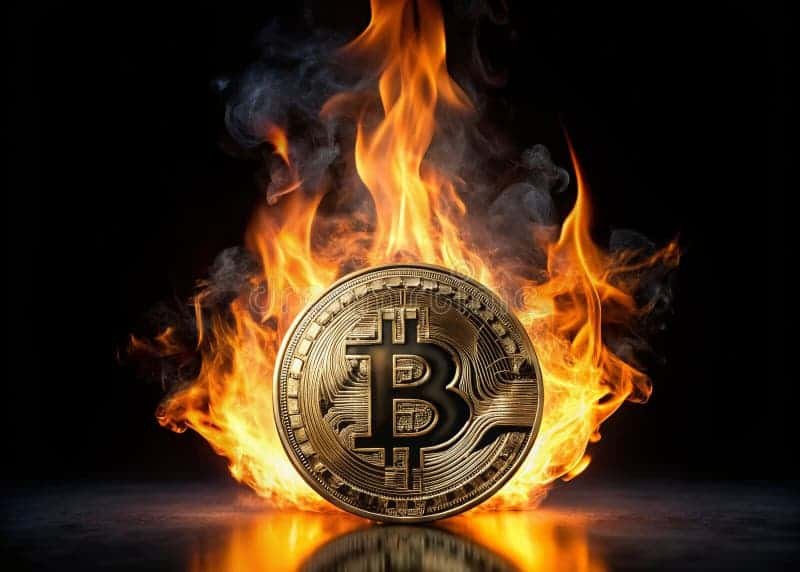
A crypto token burn is the permanent removal of tokens from circulation.
Usually, tokens are sent to a blockchain address from which they cannot practically be recovered or spent. Such an address is sometimes called a burn address or dead address.
Once tokens are effectively removed from circulation, they can no longer be used for normal transfers, trading or other activities.
For example, suppose a cryptocurrency has a circulating supply of 1 billion tokens. If the project permanently removes 100 million tokens, the circulating supply could potentially fall to approximately 900 million, assuming those tokens were previously counted as circulating.
The exact accounting depends on the project’s tokenomics and how the supply is defined.
Why Do Cryptocurrency Projects Burn Tokens?
There are several reasons why a project might implement token burns.
Reducing Token Supply
The most obvious purpose is to reduce the number of tokens available.
A project may believe that a lower supply can create a more controlled token economy.
Supporting Tokenomics
Some projects incorporate regular burns into their economic model.
For example, a portion of transaction fees or other revenue may be used to purchase and burn tokens.
Removing Unused Tokens
A project may burn tokens that were allocated for a particular purpose but are no longer needed.
This can include certain promotional, treasury or ecosystem allocations, depending on the project’s rules.
Creating Scarcity
If demand remains stable while supply decreases, the remaining tokens become relatively scarcer.
However, scarcity alone does not guarantee an increase in market value.
How Token Burns Reduce Circulating Supply
The relationship can be explained with a simple example.
Suppose a cryptocurrency has:
- Circulating supply: 500 million tokens
- Token burn: 50 million tokens
If all 50 million burned tokens were part of the circulating supply, the new circulating supply could become:
500 million − 50 million = 450 million tokens
This represents a 10% reduction in circulating supply.
However, investors should verify whether the burned tokens were actually part of the circulating supply. Burning tokens that were already locked or excluded from the circulating supply may have little or no direct effect on the reported circulating supply.
Circulating Supply vs Total Supply
It is important to understand the difference between circulating supply and total supply.
Circulating Supply
Circulating supply generally refers to tokens considered publicly available and actively circulating in the market.
Total Supply
Total supply generally represents the number of tokens that currently exist, subject to the project’s specific definition.
Some tokens may be locked, reserved or otherwise excluded from circulating supply.
A token burn can affect either or both measures depending on which tokens are destroyed and how the project’s supply is calculated.
Does Burning Tokens Increase the Token Price?
Not necessarily.
This is one of the biggest misconceptions about token burns.
A reduction in supply can theoretically support scarcity, but cryptocurrency prices are determined by supply and demand.
Imagine a project burns 10% of its token supply but simultaneously loses most of its users and demand for the token falls sharply.
The token price could still decline despite the burn.
On the other hand, if the project has strong demand and removes a meaningful amount of supply, the burn could potentially contribute to positive price dynamics.
Therefore:
Token burn ≠ guaranteed price increase
How Token Burns Can Affect Market Capitalization
Market capitalization is commonly calculated as:
Market Cap = Token Price × Circulating Supply
Suppose a cryptocurrency has:
- Token price: $2
- Circulating supply: 500 million
Its market capitalization is:
$2 × 500 million = $1 billion
Now suppose 100 million circulating tokens are burned.
The circulating supply becomes 400 million.
If the token price remains $2, the market capitalization becomes:
$2 × 400 million = $800 million
This example shows that reducing supply does not automatically increase market capitalization.
For market capitalization to remain unchanged after a supply reduction, the token price would need to rise accordingly.
Token Burns and Scarcity
Token burns can make an asset more scarce by reducing its available supply.
Consider a simple example.
A cryptocurrency has 10 billion tokens and gradually removes 1 billion tokens through burns.
The remaining supply becomes 9 billion tokens.
If demand for the cryptocurrency remains strong, fewer tokens could be available relative to demand.
This can potentially influence market sentiment.
However, scarcity is only valuable when there is meaningful demand for the asset.
A cryptocurrency with very limited supply but little utility or demand may still have a low market value.
Permanent Burns vs Temporary Lockups
A token burn should not be confused with locking tokens.
Token Burn
The tokens are permanently removed from circulation.
Token Lock
The tokens are temporarily restricted and may become available later.
For example, tokens belonging to a project’s founders may be locked for three years under a vesting schedule.
Those tokens have not necessarily been destroyed. They may eventually enter circulation.
A burn, by contrast, is intended to permanently remove tokens from the supply.
How Transaction-Based Burns Work
Some cryptocurrency projects use a burn mechanism connected to network activity.
For example, a protocol could designate a portion of transaction fees for burning.
If users conduct more transactions, the amount of tokens burned could potentially increase.
This creates a relationship between network usage and token supply.
However, the exact mechanism varies significantly between cryptocurrencies.
Investors should read the project’s official documentation to understand how its burn system actually operates.
Regular Burns vs One-Time Burns
Token burns can follow different schedules.
One-Time Burns
A project may permanently remove a large quantity of tokens in a single event.
This can significantly change the token supply but does not necessarily create a recurring reduction.
Regular Burns
Some projects conduct burns periodically.
For example, tokens might be burned monthly, quarterly or according to a specific protocol rule.
Regular burns can make the supply reduction more predictable.
However, investors should examine the actual quantity burned over time rather than focusing only on the existence of a burn mechanism.
How Investors Should Evaluate Token Burns
A burn announcement by itself does not provide enough information to evaluate a cryptocurrency.
Investors can consider several factors.
How Many Tokens Are Being Burned?
A burn of 1 million tokens has a very different impact on a project with a 10-million-token supply compared with one containing 100 billion tokens.
What Percentage of Supply Is Being Removed?
Looking at the percentage can provide more meaningful context than the raw number.
Were the Tokens Already in Circulation?
This is important when assessing the direct effect on circulating supply.
Is the Burn Permanent?
Check whether the tokens are actually destroyed or simply locked.
Is There Real Demand?
Supply reduction matters more when the cryptocurrency has genuine users and demand.
Is the Burn Sustainable?
A project may announce a large one-time burn, but investors should also examine whether its long-term tokenomics support continued value creation.
Token Burns Can Affect Investor Sentiment
Beyond the mathematical impact on supply, burns can influence investor psychology.
A large burn may be interpreted as a sign that a project is actively managing its token economy.
Investors may view a reduction in supply positively, especially if the project also demonstrates strong network activity and adoption.
However, markets can react differently depending on expectations.
If a large burn was already anticipated, it may have little additional effect on price when it occurs.
Risks of Relying on Token Burns
Investors should be careful about treating token burns as a simple investment strategy.
A project could burn billions of tokens while its underlying ecosystem remains weak.
Other risks include:
- Falling user demand
- Poor token utility
- Low liquidity
- Weak development activity
- Regulatory uncertainty
- Excessive token concentration
- Unsustainable tokenomics
A burn cannot by itself solve fundamental problems with a cryptocurrency project.
Final Thoughts
Crypto token burns can reduce circulating supply by permanently removing tokens from the market. When a meaningful number of circulating tokens are destroyed, the remaining supply can become relatively scarcer.
However, a lower circulating supply does not automatically mean a higher cryptocurrency price. Market value depends on the interaction between supply and demand, as well as factors such as adoption, utility, liquidity and investor sentiment.
When analyzing a token burn, investors should look beyond headlines and ask how many tokens were burned, what percentage of circulating supply they represent, whether they were actually circulating, and why the project conducted the burn.
Token burns can be an important part of cryptocurrency tokenomics, but they should be evaluated alongside the project’s fundamentals rather than treated as a guaranteed signal of future price growth.