What Is the Difference Between Secured and Unsecured Personal Loan?
When you need financial assistance for expenses such as medical emergencies, home renovations, education, weddings, or debt consolidation, a personal loan can be an effective solution. However, before applying, it is important to understand the two main types of personal loans: secured personal loans and unsecured personal loans.
Although both provide access to funds, they differ in terms of collateral requirements, interest rates, eligibility, loan amounts, and risk. Choosing the right type of loan depends on your financial situation, borrowing needs, and repayment capacity.
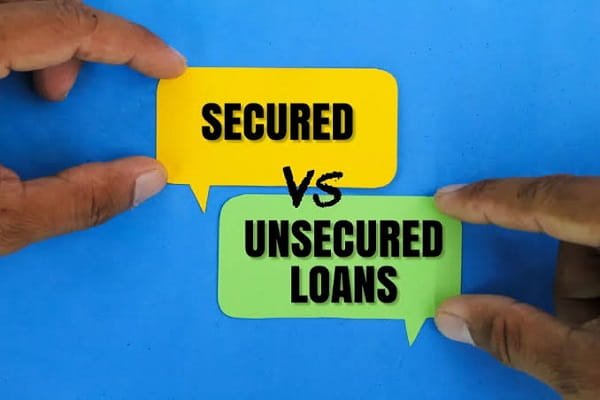
This article explains the key differences between secured and unsecured personal loans, along with their advantages and disadvantages.
What Is a Secured Personal Loan?
A secured personal loan is a loan backed by collateral. The borrower pledges an asset as security, which the lender can claim if the borrower fails to repay the loan.
Common types of collateral include:
- Fixed Deposits (FDs)
- Gold
- Property
- Investments
- Insurance policies
Since the lender’s risk is lower, secured loans generally come with more favorable borrowing terms.
What Is an Unsecured Personal Loan?
An unsecured personal loan does not require any collateral. Instead, lenders approve the loan based on factors such as:
- Credit score
- Monthly income
- Employment status
- Repayment history
- Existing financial obligations
Most personal loans offered by banks and NBFCs fall into this category, making them a popular option for salaried employees and self-employed individuals.
Secured vs Unsecured Personal Loan: Key Differences
| Feature | Secured Personal Loan | Unsecured Personal Loan |
| Collateral | Required | Not required |
| Interest Rate | Usually lower | Usually higher |
| Approval Basis | Value of collateral and financial profile | Credit score, income, and repayment ability |
| Loan Amount | Generally higher | Depends on income and creditworthiness |
| Risk to Borrower | Collateral may be seized in case of default | No asset is pledged, but credit score may suffer |
| Approval Time | May take longer due to collateral verification | Usually faster and simpler |
Advantages of a Secured Personal Loan
1. Lower Interest Rates
Because the loan is backed by collateral, lenders face less risk and often offer lower interest rates.
2. Higher Loan Amount
Borrowers can usually access larger loan amounts depending on the value of the pledged asset.
3. Easier Approval
Applicants with average credit scores may still qualify if they provide valuable collateral.
4. Longer Repayment Tenure
Many secured loans offer longer repayment periods, resulting in lower monthly EMIs.
Disadvantages of a Secured Personal Loan
1. Risk of Losing the Asset
If the borrower fails to repay the loan, the lender may take possession of the pledged collateral to recover the outstanding amount.
2. Longer Processing Time
Collateral verification, valuation, and legal documentation may increase the time required for loan approval.
3. Limited Flexibility
Not everyone owns eligible assets that can be pledged as security.
Advantages of an Unsecured Personal Loan
1. No Collateral Required
One of the biggest advantages is that borrowers do not have to pledge property, gold, or any other valuable asset.
2. Quick Approval
Many banks and digital lenders offer instant or same-day approval with minimal documentation.
3. Simple Documentation
Applicants generally need only:
- Identity proof
- Address proof
- Income documents
- Bank statements
This makes the application process faster and more convenient.
4. Flexible Usage
Unsecured personal loans can be used for various purposes, including:
- Medical emergencies
- Weddings
- Travel
- Home improvements
- Debt consolidation
- Education expenses
Disadvantages of an Unsecured Personal Loan
1. Higher Interest Rates
Since there is no collateral, lenders charge higher interest rates to compensate for the increased lending risk.
2. Strict Eligibility Criteria
Applicants usually need:
- A good credit score
- Stable employment
- Consistent income
- Strong repayment history
Borrowers with poor credit may find it difficult to qualify.
3. Lower Loan Amounts
Loan eligibility depends mainly on income and repayment capacity, which may limit the amount you can borrow.
Which Loan Should You Choose?
The right choice depends on your financial needs and circumstances.
A secured personal loan may be suitable if:
- You own valuable assets.
- You need a larger loan amount.
- You want lower interest rates.
- You are comfortable pledging collateral.
An unsecured personal loan may be a better option if:
- You need funds quickly.
- You do not own assets to pledge.
- You have a good credit score.
- You prefer a simple and fast application process.
Factors to Consider Before Applying
Regardless of the type of loan, consider the following before making a decision:
1. Compare Interest Rates
Different lenders offer different interest rates. Compare multiple options before applying.
2. Check All Charges
Review processing fees, foreclosure charges, late payment penalties, and any additional costs.
3. Evaluate Your Repayment Capacity
Borrow only an amount that you can comfortably repay through monthly EMIs.
4. Read the Loan Agreement Carefully
Understand the terms and conditions, including repayment schedule, default clauses, and foreclosure policies.
Final Thoughts
Secured and unsecured personal loans both serve important financial needs, but they differ significantly in terms of collateral, interest rates, approval process, and risk. A secured personal loan is generally suitable for borrowers seeking larger amounts at lower interest rates and who are willing to pledge an asset as security. In contrast, an unsecured personal loan offers speed, convenience, and flexibility without requiring collateral, making it ideal for borrowers with strong credit profiles and stable incomes.
Before choosing either option, compare lenders, understand the total borrowing cost, and assess your financial situation carefully. Selecting the right type of personal loan can help you meet your financial goals while maintaining healthy long-term financial stability.