Top 5 Business Ideas Near Court
A case number echoes through the corridor. Lawyers move quickly between courtrooms, clerks carry thick bundles of files, and anxious visitors search for a missing photocopy. Outside the gate, typists prepare applications, tea stalls fill with people discussing their next hearing, and a courier rider waits to collect an urgent document.
A court attracts lawyers, litigants, police personnel, clerks, government employees and witnesses on every working day. Many of these visitors need documents, stationery, food and professional support within a short time. A business near a court can perform well when it provides accurate, confidential and quick service. Let’s check out the top five business ideas near a court.
1. Legal Typing, Printing and Photocopy Centre
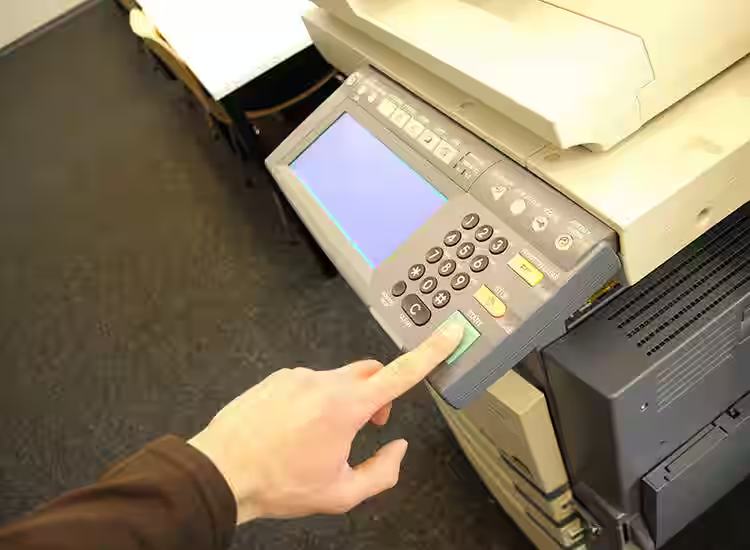
A document centre is one of the most practical businesses near a court. Lawyers and litigants frequently need printouts, photocopies, scanning, binding and urgent corrections to documents.
Services may include black-and-white printing, colour printing, document scanning, lamination, spiral binding and preparation of multiple file sets. Skilled typists can type documents according to instructions supplied by lawyers or customers.
Files can be received through email or WhatsApp before the customer arrives. This reduces waiting time and allows urgent documents to be prepared quickly. The centre should maintain fast printers, backup equipment and a dependable internet connection.
Confidentiality is extremely important. Customer documents should not be shared, stored unnecessarily or left visible to other visitors. Staff should provide typing and printing assistance without presenting themselves as lawyers or giving legal advice.
2. Legal Stationery and Authorised Stamp Service
Court-related work requires specialised stationery that may not be available in an ordinary shop. A legal stationery store can supply these products to advocates, clerks and members of the public.
The shop may stock file covers, legal-size paper, envelopes, tags, folders, pens, registers, adhesive labels and document-storage boxes. Advocate bands, gowns and other professional accessories may also be sold where there is sufficient demand.
The business may provide stamp paper, e-stamp or franking-related assistance only after receiving the appropriate authorisation. Rules can differ by state, so no one should sell or issue these products without completing the required registration.
Clearly displayed prices and genuine products will help the shop build trust. Delivering stationery and files to nearby lawyers’ chambers can create repeat orders.
3. Tea, Breakfast and Quick-Meal Counter
Court visitors often spend several hours waiting for their case or completing paperwork. Lawyers and court staff may also have limited time between hearings. A clean food counter can serve these customers throughout the working day.
The menu can include tea, coffee, poha, idli, sandwiches, samosa, paratha, rice meals and bottled water. Food should be affordable, fresh and easy to serve quickly.
Breakfast demand may begin before court hours, while tea and snacks may sell throughout the day. Packed lunch boxes can be delivered to advocates’ chambers and nearby offices. Monthly meal plans may attract clerks, shopkeepers and regular court employees.
The outlet should have proper waste bins, safe drinking water and a hygienic preparation area. The required food registration or licence must also be obtained before starting operations.
4. Courier and Secure Document Delivery Service
Law firms, businesses and individuals regularly need documents delivered to offices, clients, banks and government departments. A courier and local document-delivery service near a court can handle these time-sensitive requirements.
The business may offer same-day local delivery, interstate courier booking, packaging, tracking and proof of delivery. Special document envelopes and tamper-evident packaging can provide additional security.
A pickup service from nearby lawyers’ chambers can save valuable time. Customers should receive a receipt containing the destination, contact details and tracking information. Sensitive documents must never be opened or left unattended.
The operator should clearly explain delivery timelines and avoid guaranteeing results that depend on another courier company. Reliable tracking and accurate delivery records are essential for building long-term professional relationships.
5. Shared Workspace and Client Meeting Centre
Many independent advocates, junior lawyers and outstation professionals may not have a permanent chamber near the court. A shared workspace can provide desks, meeting rooms and basic office facilities on an hourly or monthly basis.
The centre may offer internet access, charging points, printers, lockers, drinking water and private consultation cabins. Litigants waiting for lawyers may also use a paid seating area if the facility is permitted and professionally managed.
Privacy is necessary because legal discussions may involve sensitive personal or business information. Consultation cabins should provide adequate sound separation, and no meeting should be recorded.
The workspace can offer monthly memberships to lawyers and daily passes to visitors. A location within walking distance of the court can be more valuable than a larger office situated far away.
How to Select the Right Business
Before investing near a court, consider these important points:
- Type of court: District courts, high courts, tribunals and family courts may generate different service requirements.
- Daily footfall: Observe the number of lawyers, litigants and court employees visiting on ordinary working days.
- Peak hours: Most business may occur before hearings begin and during short breaks.
- Competition: Check how many typing centres, food stalls and stationery shops already operate nearby.
- Accuracy and privacy: Document-related businesses must protect customer information and avoid careless printing or delivery errors.
- Access restrictions: Confirm vending, parking, security and delivery rules around the court premises.
- Authorisations: Obtain all permissions required for food sales, courier operations, stamp services or commercial use of the property.
Conclusion
A court area can support profitable businesses because visitors frequently require documentation, stationery, refreshments, courier services and temporary workspaces. The best opportunity is one that saves time while maintaining accuracy, confidentiality and professional conduct. Study the court’s daily routine, understand existing competition and obtain the required permissions before investing. With quick service and a trustworthy reputation, a small business near a court can attract regular customers for many years.